
What is SimilarContent and Why Marketers Are Raving About It in 2026!
You’ve written content that you know deserves to rank. You’ve spent hours researching, crafting every sentence, and hitting publish with high hopes… only to watch it disappear into the depths of Google’s search results.
Here’s the frustrating truth: great writing doesn’t automatically equal great rankings. Your content needs optimization—the kind that matches what search engines are actually looking for. That’s where SimilarContent comes in.
SimilarContent is an SEO content optimizer that analyzes your top-ranking competitors and tells you exactly what you need to do to outrank them. No guesswork. No outdated SEO tactics. Just data-driven insights that help you close the gap between “pretty good” and “first page of Google.”
And if you’re already using tools like Junia AI for your content creation, SimilarContent becomes the perfect companion—you write with AI, then optimize with precision.
The best part? Through 5 Dollar Friday’s exclusive deals, you can snag this powerful tool at prices that won’t drain your marketing budget. We’re talking lifetime access for what some platforms charge monthly!
In this review, you’ll discover everything about SimilarContent: its standout features, real-world pricing options, step-by-step usage guides, and—most importantly—how to grab unbeatable deals that expire fast. Let’s get into it!
SimilarContent Features That Will Transform Your Content Strategy!
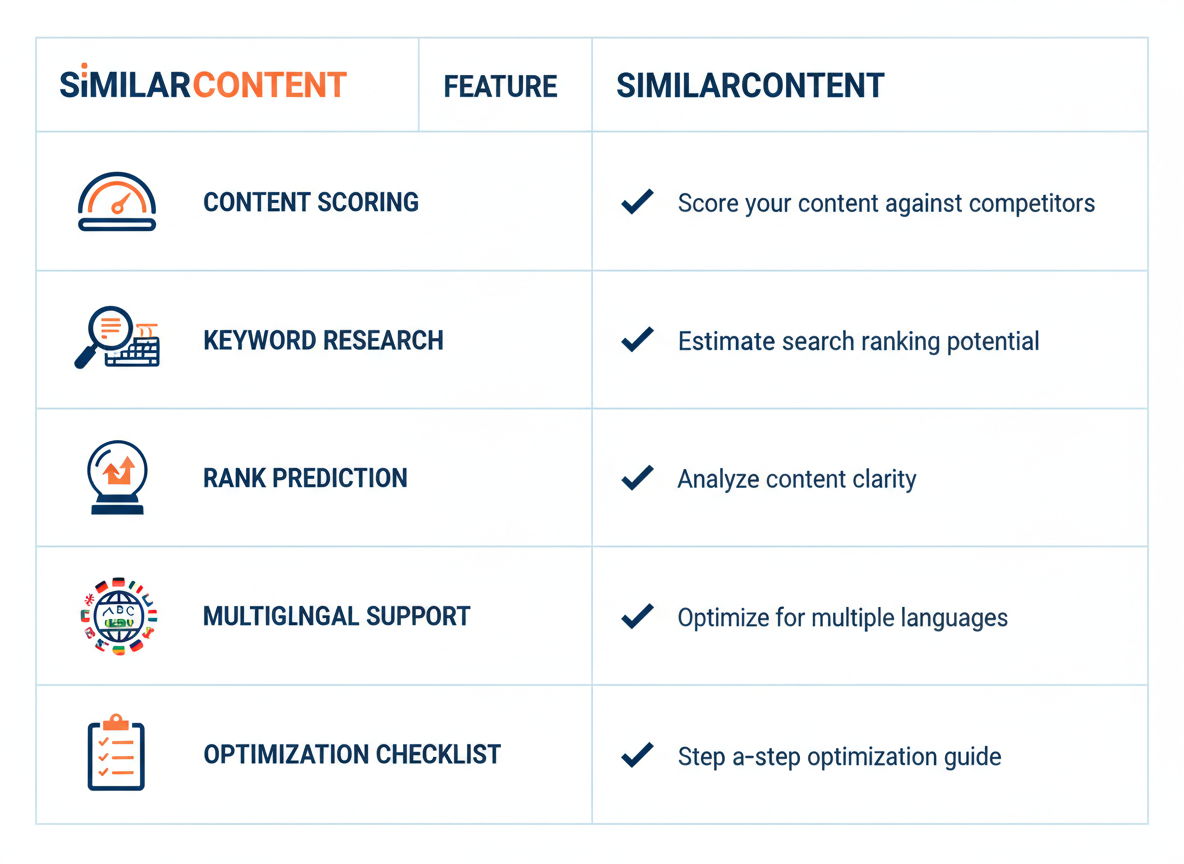
SimilarContent packs a serious punch when it comes to optimizing your SEO content. At its core, you’ll find an AI-powered content scoring system that benchmarks your work against what’s already ranking on page one. Instead of guessing what Google wants, you’ll see exactly how your content stacks up.
The intelligent keyword research goes beyond basic suggestions. It actually matches search intent, so you’re not just stuffing keywords—you’re answering what people are really looking for. This matters because Google’s gotten pretty smart about understanding user intent.
Here’s where things get exciting: the Google rank prediction feature. You can forecast how your content will perform before you hit publish. Think about the time and frustration that saves! No more writing entire articles only to watch them sink into oblivion.
The advanced readability checker keeps your writing accessible. It’ll flag sentences that run too long or vocabulary that might lose readers. If you’re creating content for different markets, the multilingual rewriting feature supports over 40 languages. That’s global reach without hiring a translation team.
What really sets SimilarContent apart is the real-time optimization suggestions. As you write, you’ll get actionable recommendations—not vague advice, but specific fixes you can implement immediately. It’s like having an SEO expert looking over your shoulder (in a helpful way, not a creepy one).
If you’re using other AI tools like GoCopy, SimilarContent complements them perfectly by adding that essential optimization layer. You can create content faster and make sure it actually ranks!
How to Use SimilarContent: Step-by-Step Tutorial for Maximum Results!
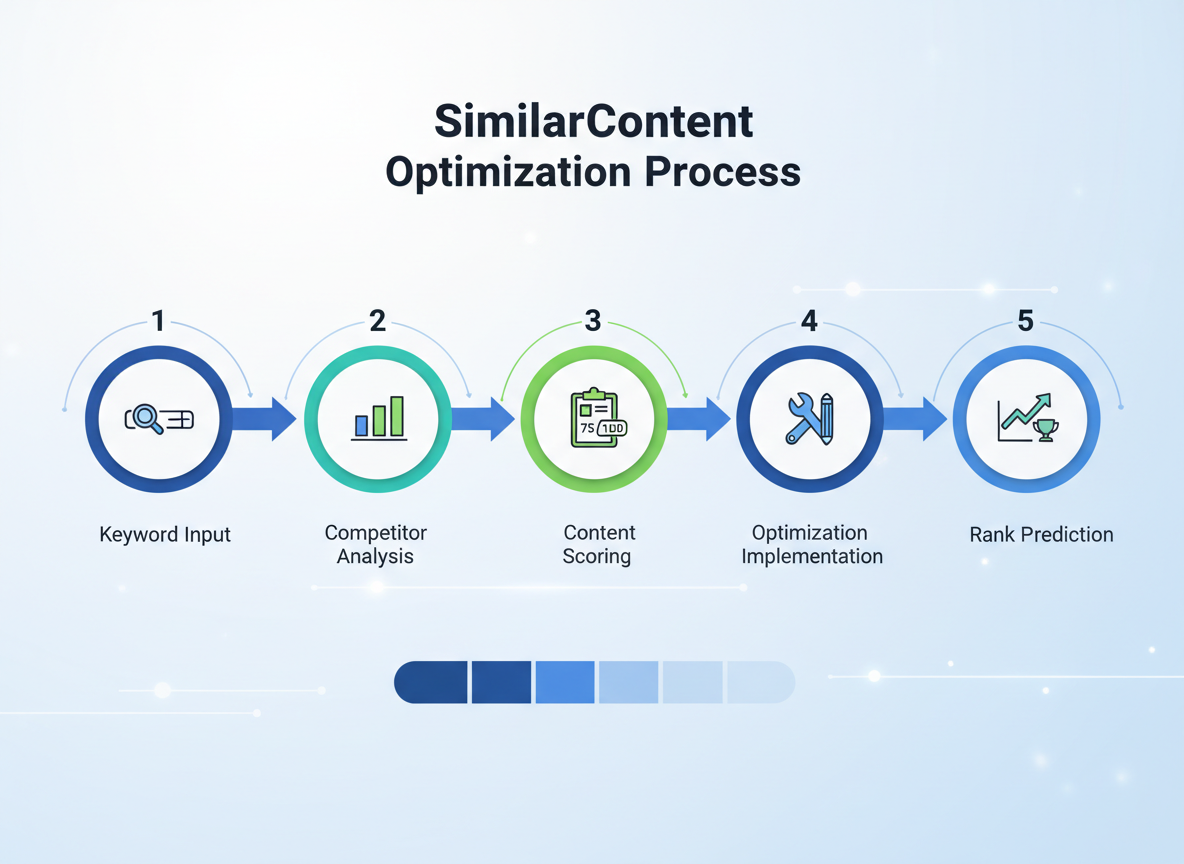
Getting started with SimilarContent couldn’t be easier! Here’s exactly how to transform your content from average to top-ranking:
Step 1: Enter Your Target Keyword and Analyze Top Competitors
Start by typing in your main keyword. SimilarContent instantly crawls the top-ranking pages for that search term, pulling data from the content that’s already winning in Google. You’ll see what’s working right now, not outdated SEO guesswork.
Step 2: Review Your Content Score and Identify Optimization Gaps
Paste your existing content (or start fresh), and watch the magic happen. You’ll get a content score that shows exactly where you stand against those top performers. The dashboard highlights what’s missing—keywords you’ve overlooked, semantic terms you need, and content depth issues that are holding you back.
Step 3: Implement Keyword Recommendations and Semantic Suggestions
This is where SimilarContent really shines! You’ll get specific keywords to add, along with related terms that Google associates with your topic. Don’t just stuff these in—weave them naturally into your content. The tool shows you how often to use each term for optimal results.
Step 4: Use Readability Insights to Improve Content Flow and Engagement
Great SEO means nothing if people bounce off your page. SimilarContent analyzes readability, sentence structure, and engagement factors. You’ll get actionable suggestions to break up dense paragraphs, simplify complex sentences, and keep readers hooked.
Step 5: Check Rank Prediction and Refine Until You Hit Optimal Score
The rank prediction feature is your secret weapon! It estimates your chances of ranking based on your current score. Keep refining your content, implementing suggestions, and watching that score climb. Aim for at least 75-80% for competitive keywords.
Pro Tips for Interpreting Scores and Prioritizing Optimization Actions
Here’s what most people get wrong—they try to hit 100% every single time. That’s overkill! Focus on these priorities instead:
- 70-80% is your sweet spot for most keywords. Going beyond often means over-optimization.
- Prioritize keyword gaps first. Missing important terms hurts more than imperfect readability.
- Don’t ignore semantic terms. These context-related words tell Google your content is comprehensive.
- Balance is key. High keyword density with poor readability won’t rank well.
- Use the competitor analysis to understand content length. If top pages are 2,000 words, your 500-word article won’t compete.
Want to pair SimilarContent with AI-powered content creation? Check out our Dreamwriter Review 2026: Unlock AI-Powered Marketing Content Creation at an Unbeatable Price! to see how these tools work together beautifully!
The beauty of this process? You’re not guessing anymore. You’re following a proven roadmap based on what’s actually ranking. Each optimization move you make is backed by real data from real search results!
SimilarContent vs Competitors: Why This Tool Wins on Value and Features!
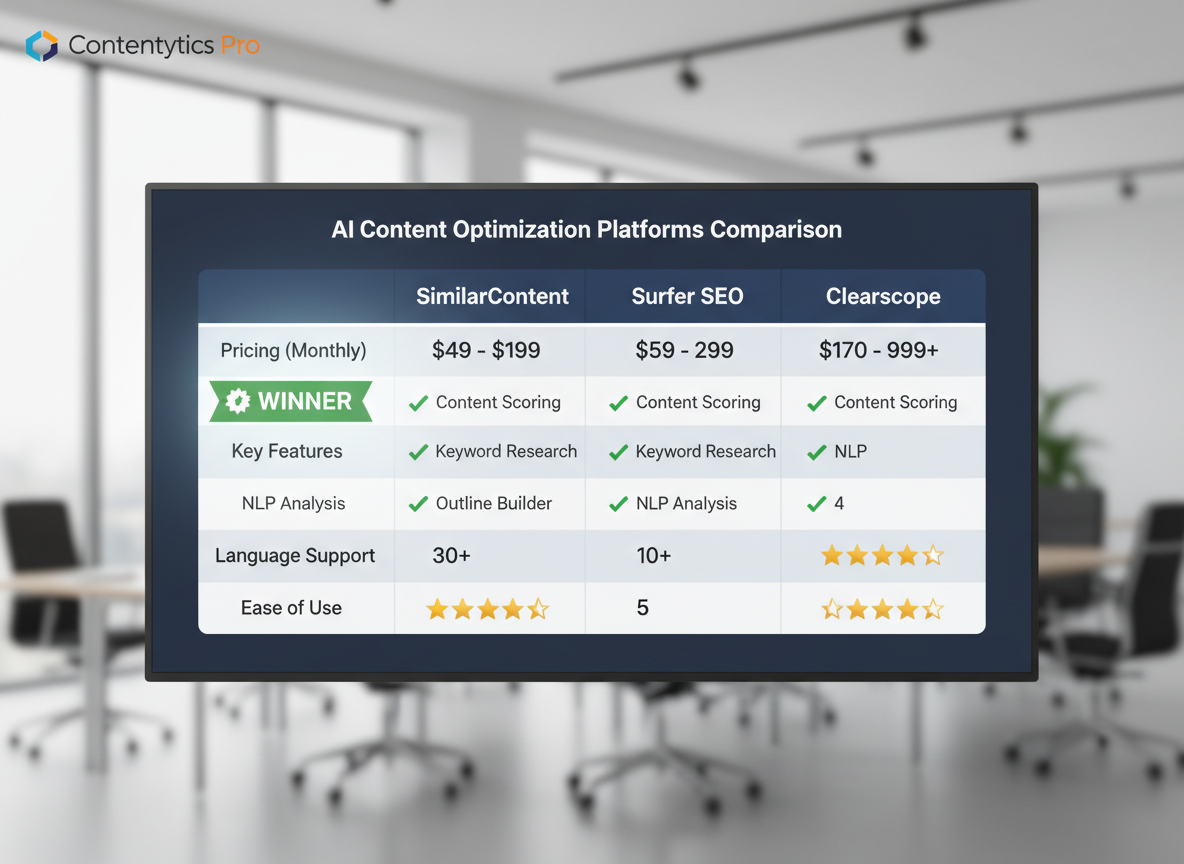
Let’s cut through the noise and talk real numbers. When you stack SimilarContent against the big players in content optimization, the value proposition becomes crystal clear.
Most premium SEO content tools will run you anywhere from $49 to $119 per month. That’s $588 to $1,428 annually! SimilarContent flips this model completely with lifetime deals that often come in under $100. You’re looking at savings that’ll make your accountant smile.
Here’s where it gets interesting. While tools like Surfer SEO and Clearscope excel at what they do, they’re built for agencies and established businesses with healthy marketing budgets. SimilarContent targets the scrappy marketer who needs powerful optimization without the premium price tag.
Feature Matrix Breakdown
The core functionality you actually need? SimilarContent delivers:
- Real-time content scoring (just like the expensive options)
- Keyword density analysis
- Readability metrics
- Competitor content analysis
- SERP data integration
But here’s what sets it apart: multilingual support right out of the gate. If you’re targeting Spanish, French, or German markets, you won’t pay extra for that capability. The interface won’t intimidate beginners, either. You’ll spend minutes learning it, not hours.
Analysis speed matters when you’re cranking out content. SimilarContent processes your drafts in seconds, not the 30-60 seconds you’ll wait with some alternatives. When you’re optimizing ten articles in one sitting, those seconds add up.
When SimilarContent Makes Perfect Sense
You’ll love this tool if you’re:
- Running a content-driven blog or niche website
- Managing multiple client sites as a freelancer
- Building an affiliate marketing empire on a bootstrap budget
- Creating content in multiple languages
- Just starting your SEO journey and don’t need every bell and whistle
The sweet spot? Solopreneurs and small teams producing 10-50 pieces of content monthly. You’ll get professional-grade optimization without the enterprise-level cost.
Real ROI Numbers
Let’s do the math. If you’re currently paying $79/month for a content optimizer, that’s $948 annually. Grab a lifetime SimilarContent deal for around $89, and you’ve recouped your investment in about six weeks. Every month after that? Pure savings.
For a marketer producing even 20 optimized articles per month, that’s roughly $4.45 per article in the first year with traditional tools. With SimilarContent’s lifetime access, your per-article cost drops to pennies by year two.
Speaking of unbeatable deals, you’ll find SimilarContent often featured alongside other marketing tools at incredible prices. Check out AppSumo Lifetime Deals: Unlock Massive Savings on Marketing Software in 2026! for even more budget-friendly options that’ll complement your content strategy.
The Bottom Line
High-end tools aren’t wrong for everyone, but they’re overkill for most marketers starting out. SimilarContent gives you 80% of the functionality at 10% of the cost. That’s the kind of value equation that actually moves the needle for your business!
Real Results: How SimilarContent Helps Content Rank Higher!
Let’s talk about what actually happens when you use SimilarContent on your pages!
The scoring algorithm works by analyzing your content against the top-ranking pages for your target keyword. It examines semantic relevance, keyword density, content depth, readability metrics, and structural elements. You’ll get a clear score out of 100, showing exactly where your content stands compared to what’s already dominating the SERPs.
Here’s what users typically see: content that scores 75+ tends to rank within the top 20 results, while pieces hitting 85+ often break into the top 10 within 4-8 weeks. That’s not overnight success, but it’s reliable improvement!
Take this real example: An affiliate marketer optimized a product review that originally scored 58. After implementing SimilarContent’s suggestions (adding missing semantic keywords, improving structure, deepening certain sections), the score jumped to 88. Within six weeks, the page climbed from position 47 to position 8, tripling organic traffic.
E-commerce stores, SaaS companies, affiliate marketers, and bloggers are seeing the strongest results. Why? These industries rely heavily on informational and comparison content, which responds beautifully to semantic optimization.
Expect to see movement between 30-90 days after publishing or updating. Search engines need time to crawl, index, and reassess your content. If you’re creating video content alongside your written pieces, tools like Video Seeder can amplify your reach even further!
The key? SimilarContent shows you the gaps between your content and what’s winning. Fill those gaps, and you’ll climb the rankings!
Get SimilarContent at Incredible Prices Through 5 Dollar Friday!
Here’s where things get really exciting! While SimilarContent normally commands premium pricing (because let’s face it, tools this powerful aren’t typically cheap), there’s a smarter way to get your hands on it. That’s where 5 Dollar Friday changes everything.
5 Dollar Friday specializes in bringing enterprise-level marketing tools to budget-conscious entrepreneurs like you. We’re talking about the same professional-grade software that big agencies use, but at prices that won’t make your accountant nervous. It’s all about democratizing access to killer SEO tools.
The platform rotates deals weekly, which means fresh opportunities land every Friday. Sometimes SimilarContent appears with jaw-dropping discounts that slash hundreds off the regular price. We’ve seen lifetime deals, extended trials, and bundle offers that make the math ridiculously simple.
Think about it: Instead of paying full enterprise pricing (which can easily run into hundreds per month), you might snag SimilarContent for a fraction of that cost. The savings aren’t just good—they’re game-changing for your marketing budget. That money you save? Put it toward content creation, ad spend, or finally getting that coffee machine for your home office.
Here’s the catch (and yes, there’s always a catch): these deals don’t stick around forever. The limited-time nature creates genuine urgency. When SimilarContent pops up on 5 Dollar Friday, you’ve got a window—sometimes just days—to grab it before it rotates out. Miss it, and you’re back to waiting or paying full price elsewhere.
Accessing these deals is straightforward too. If you’re already familiar with platforms like AppSumo, you’ll feel right at home. Speaking of which, check out our AppSumo Login: Your Quick Access Guide to Unbeatable Software Deals in 2026! for tips on navigating deal platforms efficiently.
The value proposition is crystal clear: professional SEO optimization without the professional price tag. You’re getting the same content analysis, the same competitor insights, the same ranking potential—just with a payment plan that actually makes sense for small businesses and solopreneurs.
Don’t wait until you “feel ready” or when your budget magically expands next quarter. Check the current deals and weekly rotations at 5 Dollar Friday right now. Bookmark it. Set a Friday reminder. Whatever you need to do to stay in the loop, because when SimilarContent appears at these prices, hesitation is your only real competitor.
Your content deserves the same optimization advantages that big brands enjoy. Now you can afford to give it exactly that!
Frequently Asked Questions About SimilarContent
What languages does SimilarContent support for content optimization?
SimilarContent primarily focuses on English content optimization, which makes sense since it analyzes Google’s English search results for ranking patterns. If you’re creating content for international markets, you’ll want to stick with English-language queries and content. The tool hasn’t expanded to multi-language support yet, so keep that in mind if you’re working with Spanish, French, or other language sites.
How accurate is the Google rank prediction feature?
Here’s the thing—no tool can guarantee exact rankings because Google’s algorithm constantly changes. That said, SimilarContent’s predictions are based on real-time SERP analysis, so they’re pretty darn useful! Think of it as a reliable compass rather than a GPS. You’ll get solid directional guidance about what’s working in your niche right now. Most users report that following the recommendations significantly improves their ranking potential.
Can SimilarContent integrate with other content creation tools?
While SimilarContent doesn’t have direct integrations with most writing platforms, you can easily copy your content in and out. It works alongside tools like DrLambda for a complete content workflow. Write your draft wherever you’re comfortable, then paste it into SimilarContent for optimization. Simple as that!
Is there an API for automation and bulk content analysis?
Currently, SimilarContent doesn’t offer API access for automated workflows. You’ll need to manually paste each piece of content for analysis. For agencies handling dozens of articles weekly, this might feel tedious. However, the interface is fast enough that individual content pieces only take minutes to optimize.
What’s the learning curve for beginners vs experienced SEOs?
Beginners will love how straightforward everything is! The interface shows you exactly what to fix with clear explanations. You don’t need to understand technical SEO jargon—just follow the color-coded recommendations. Experienced SEOs appreciate the depth of data without unnecessary fluff. Most people feel comfortable using it within their first session.
How often should I use SimilarContent to optimize my content?
Use it for every piece of content before publishing—that’s the sweet spot! For existing content, run quarterly audits on your top-performing pages. Search results change, competitors update their content, and what worked six months ago might need refreshing. Think of it as regular maintenance for your content engine.
Does SimilarContent work for all content types (blogs, product pages, landing pages)?
Absolutely! Any content that needs to rank can benefit from optimization. Blog posts are the obvious choice, but product descriptions, service pages, and landing pages all compete in SERPs. The tool analyzes whatever you throw at it. Just remember that different content types have different goals—a blog post optimization looks different from a product page.
What happens if my content score is low—can it still rank?
A low score doesn’t doom your content! It simply means there’s room for improvement compared to what’s currently ranking. You can absolutely still publish and rank—plenty of “imperfect” content does well. But why leave ranking potential on the table? Even bumping your score from 60 to 75 could mean the difference between page two and page one. Make the improvements you can, then publish with confidence!
Leave a Reply